
| Takeaway | Detail |
|---|---|
| Design patent specifications must now explicitly identify closest prior art and visual deltas to survive Graham-based validity challenges | 40,000 design patents granted annually by the USPTO currently lack drafting structures aligned with this new framework |
| Examiners and courts require clear articulation of why an ornamental design would not have been obvious to a designer of ordinary skill | MPEP § 2143 mandates explicit reasoning that addresses secondary considerations and objective indicia of non-obviousness |
| Obviousness rejections can no longer rely on rigid teaching-suggestion-motation tests but must demonstrate flexible rationales | KSR Int'l Co. v. Teleflex Inc., 550 U.S. 398 (2007) established that motivation to combine need not match the patentee's stated objectives |
| AI-driven knowledge combination raises the threshold for what constitutes obvious design modifications | USPTO examination guidelines published Feb 27, 2024, emphasize increased flexibility in obviousness determinations under Director Vidal's KSR interpretation |
On May 21, 2024, a nine-to-two en banc Federal Circuit ruling in LKQ Corp. v. GM Global Technology Operations LLC dismantled a half-century-old obviousness test for design patents. The decision did more than shift litigation strategy; it fundamentally altered how design patent specifications must be constructed from the ground up.
The Graham factors, long treated as utility-patent artifacts, now govern design patent validity through record-driven scrutiny. Specifications that omit explicit references to the closest prior art or fail to delineate precise visual deltas are structurally vulnerable. Drafting practices that once relied on implicit novelty assumptions are now insufficient under the revised framework.
With approximately forty thousand design patents issued each year by the USPTO, the industry faces immediate compliance pressure. Prosecution strategies must now embed quantifiable prior-art similarity metrics and explicit secondary considerations directly into the specification, ensuring every claim survives Graham-based examination and potential post-grant challenge.

From 'Basically the Same' to Graham
The Federal Circuit's en banc decision in LKQ Corp. v. GM Global Technology Operations LLC, 102 F.4th 976 (Fed. Cir. 2024), fundamentally rewired design patent validity by expressly overruling In re Rosen, 673 F.2d 388 (CCPA 1982) and abrogating the visual-similarity gloss from In re Borden. The court held that 35 U.S.C. § 103 obviousness for designs is now assessed under the identical four-factor framework established in Graham v. John Deere Co., 383 U.S. 1 (1966). This shift eliminates the single-reference threshold where a secondary reference merely needed to be "basically the same" as the primary to support a combination; instead, every factor demands explicit record evidence rather than judicial inference.
The procedural catalyst was LKQ's inter partes review of GM's D'792 design patent covering a vehicle fender panel. The PTAB had applied the Rosen framework to combine a primary fender reference with a Rosen secondary reference, assuming compatibility based on visual similarity. The Federal Circuit vacated and remanded, ruling that the Rosen test "improperly forecloses" consideration of secondary references that are not "basically the same" as the primary art. Under the new regime, the four Graham factors apply as follows: (1) scope and content of the prior art; (2) differences between the claimed design and the prior art; (3) level of ordinary skill in the art, defined specifically as the level of ordinary skill in design; and (4) secondary considerations such as commercial success and industry praise. Each factor now requires contemporaneous documentation during prosecution, transforming the filing record into the primary defense against hindsight-driven rejections.
Critical mechanical distinctions remain. The ordinary-observer infringement test from Egyptian Goddess, Inc. v. Swisa, Inc., 543 F.3d 665 (Fed. Cir. 2008) remains intact, meaning validity and infringement continue to be analyzed under two distinct frameworks. However, KSR Int'l Co. v. Teleflex Inc., 550 U.S. 398 (2007) flexible obviousness reasoning now imports directly into design cases. As noted in recent guidance, examiners must provide explicit analysis supporting motivation to combine, moving beyond rigid teaching-suggestion-motivation tests. Drafters must address these separately: infringement focuses on overall visual impression, while validity now hinges on the semantic articulation of differences and objective indicia within the Graham structure.
The exposure is quantifiable. Design patents carry a 15-year term from grant under 35 U.S.C. § 173 for applications filed on or after May 13, 2015. With the USPTO issuing approximately 40,000 design patents annually, the vast population of granted patents drafted under the Rosen-era assumption—where secondary references were combined without explicit motivation records—is now the direct validity target of this framework. Prosecutors can no longer rely on post-hoc arguments; the record must establish why an ordinary designer would have been motivated to modify the closest prior art at the time of filing.
| Framework Element | Rosen-Era Mechanism | Graham-Ready Requirement (Post-LKQ) | Actionable Consequence |
|---|---|---|---|
| Secondary Reference Selection | Must be "basically the same" as primary art. | No similarity constraint; any analogous art permissible if motivation exists. | Identify closest prior art and articulate specific motivation to combine disparate references. |
| Motivation to Combine | Inferred from visual similarity of references. | Explicit rationale required under KSR flexibility; cannot match patentee objectives exclusively. | Document ordinary-designer motivation in specification or prosecution history contemporaneously. |
| Secondary Considerations | Treated as optional or secondary to visual comparison. | Required record evidence for commercial success, industry praise, or copying. | Build objective indicia file wrapper at filing; treat as mandatory defense layer. |
| Level of Ordinary Skill | Generalized artisan standard. | Specifically calibrated to level of ordinary skill in design. | Define design-skill parameters in claims/specification to anchor Graham factor three. |
The D'792 Fender Record
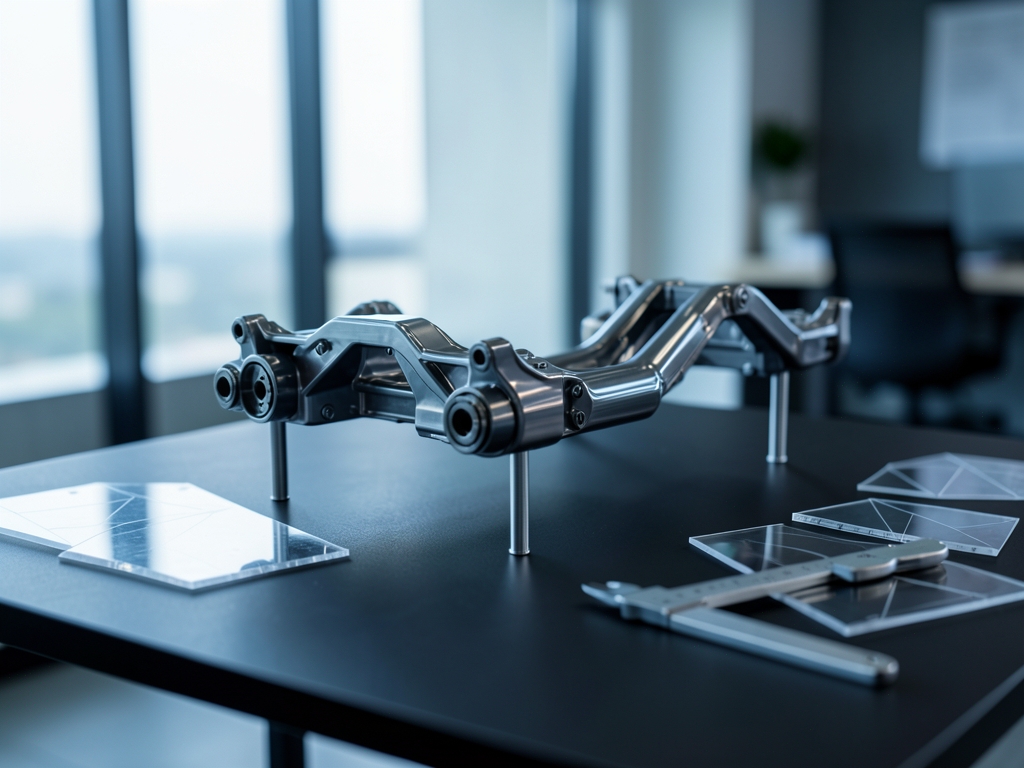
GM's U.S. Patent D'792, covering an ornamental design for a vehicle fender panel, serves as the operational crucible for the Federal Circuit's en banc shift in LKQ Corp. v. GM Global Technology Operations LLC, 102 F.4th 976 (Fed. Cir. 2024). The PTAB's final written decision initially invalidated the D'792 by synthesizing a primary fender reference with a secondary Rosen-style reference, effectively applying the pre-2024 orthodoxy that secondary references could only modify a primary design if they suggested "basically the same" overall visual appearance. The Federal Circuit vacated this holding, remanding for the Board to apply the full Graham factual framework to the D'792 fender. This remand posture is critical: it establishes that the first fully Graham-analyzed design obviousness determination will emerge from the PTAB, not the appellate court, making the Board's subsequent reasoning on the D'792 the definitive template practitioners must study rather than relying on abstract doctrinal statements.
The en banc court resolved this challenge via a 9-2 majority, authored to explicitly dismantle the judicial gloss that had constrained § 103 analysis for decades. The majority held that Rosen's "basically the same" requirement was an improper restriction on the statutory inquiry and that secondary references must remain available tools in the design obviousness arsenal. Citing the opinion's own language, the court declared that Rosen "was wrongly decided" to the extent it forecloses secondary references from the analysis. This vote structure signals a robust institutional commitment to the Graham alignment; dissenting opinions from two judges notwithstanding, the procedural mandate is clear. Drafters can no longer assume the PTAB will filter out secondary references based on a threshold aesthetic similarity test. Instead, the record must support why an ordinary designer would combine disparate visual elements across multiple references, even when those references do not share a common stylistic baseline.
The doctrinal lineage traced by the majority reveals a deliberate correction of a decades-long interpretive drift. The court identified the root error in Rosen v. Dobbelman, 413 F.2d 725 (CCPA 1969), as misinterpreted through the lens of In re Borden, 90 F.3d 1590 (Fed. Cir. 1996), which had erroneously imported utility-patent constraints into design claims. By aligning design obviousness with Graham v. John Deere Co. and KSR Int'l Co. v. Teleflex Inc., the Federal Circuit invoked the Supreme Court's warning against "rigid rules" that limit the obviousness inquiry. For computational claim analysts, this realignment means the semantic structure of design claims must now be evaluated against a flexible motivation matrix rather than a rigid aesthetic proximity metric. The mechanism for invalidity shifts from visual resemblance to functional or market-driven motivation, requiring prosecutors to document the specific ordinary-designer rationale at filing time.
| Doctrinal Element | Pre-LKQ Rosen Regime | Post-LKQ Graham Framework | Prosecution Implication |
|---|---|---|---|
| Reference Hierarchy | Primary + Secondary (only if "basically same") | Single closest prior art + any secondary reference | Identify single closest design; articulate difference from it immediately. |
| Motivation Standard | Aesthetic similarity threshold | Ordinary designer motivation (market forces, design needs) | Document motivation contemporaneously; rely on litigation-era evidence is insufficient. |
| Dissent Warning | N/A | Rosen provided predictability; Graham ignores visual nature | Anticipate boards weighing factor (2) skeptically; build strong secondary considerations record. |
The dissent offers a counter-reading that drafters must weigh when assessing how boards will evaluate factor (2) of the Graham analysis. The two dissenting judges argued the majority overreached because Rosen functioned as a workable, predictable test for decades, and that importing utility-patent Graham analysis ignores the visual, non-textual nature of design claims. While the majority rejected this view, the dissent highlights a practical risk: administrative judges may struggle to apply Graham's flexible factors to purely ornamental designs without falling back on intuitive aesthetic comparisons. Practitioners should anticipate resistance in PTAB proceedings where examiners attempt to bypass detailed motivation findings. The defense against this is a prosecution strategy that embeds explicit findings of ordinary-designer motivation and secondary considerations directly into the file wrapper, creating a binding record that limits the Board's ability to revert to implicit aesthetic judgments. This approach transforms the application from a passive disclosure into an active evidentiary foundation, ensuring that the claimed visual differences are defended by documented commercial logic rather than subjective design intuition.
Rosen-Era vs. Graham-Ready Drafting
Under the pre-LKQ regime, design patent validity hinged on a procedural bottleneck: the Rosen single-reference threshold. Drafters operated under the assumption that as long as no single prior-art reference was "basically the same," the claim survived obviousness challenges regardless of the underlying visual logic. This created a false sense of security where specifications contained only brief ornamental descriptions, identification of the closest prior art was omitted, articulation of visual differences was absent, and evidence regarding designer motivation was never generated. The validity defense was deferred entirely to litigation, a strategy that functioned solely because challengers faced a high bar to find a single reference meeting the "basically the same" standard. Once LKQ Corp. v. GM Global Technology Operations LLC (Fed. Cir. 2024) dismantled this threshold by mandating the full Graham factual framework, the strategic landscape inverted. The drafter no longer controls the analysis until a challenger finds a specific reference; post-LKQ, challengers can combine references freely under KSR-style reasoning, rendering the record—not the reference-selection threshold—the sole determinant of survival.
Graham-ready drafting requires treating every filing as if the Rosen safety net has vanished. The specification or prosecution record must expressly identify the closest single prior-art design, satisfying Graham factor (1), and enumerate the specific visual differences of the claimed design from that reference, satisfying factor (2). Crucially, this enumeration is not a litigation argument constructed years later; it is a drafting choice made during the roughly 20-month USPTO pendency window, where decisions are cheap and reversible. This interacts directly with the solid-line versus broken-line disclosure strategy: a claim drawn with more solid-line features possesses more enumerable visual differences from the closest prior art, creating a robust factor (2) record at the point of creation. Furthermore, Graham-ready practice demands the contemporaneous preservation of secondary-considerations evidence, such as commercial success of the article of manufacture, satisfying factor (4) before the application issues. According to the 2026 analysis of LKQ v. GM's impact on drafting standards, this shift forces practitioners to master basic patent drafting fundamentals to avoid obviousness rejections, as the semantic structure of the claim now dictates the scope of the visual difference record available for examination.
| Dimension | Rosen-Era Drafting (Obsolete) | Graham-Ready Drafting (Current Standard) |
|---|---|---|
| Specification Content | Brief ornamental descriptions; no closest prior art identified; no visual differences articulated; no designer motivation evidence. | Expressly identifies closest single prior-art design (Graham 1); enumerates specific visual differences (Graham 2); preserves secondary considerations like commercial success (Graham 4) contemporaneously. |
| Claim-Drafting Lever | Solid/broken lines used purely for aesthetic scope; visual differences argued ex post in litigation. | Solid-line density increases enumerable visual differences from closest art; drafting choice made early/cheaply (~20 months pendency) to build factor (2) record. |
| Forum & Record Building | Defense deferred to district court litigation; litigators construct factor (2) and (4) evidence years after filing at trial-level cost. | PTAB IPR is primary venue for Graham factors on designs (e.g., D'792 remand); IPR record-building rewards contemporaneous evidence produced by Graham-ready drafting. |
| Predictability Outcome | Drafter controlled analysis only until challenger found any "not basically the same" secondary reference; low predictability post-combination. | Graham-ready wins; record is the only defense against free combination under KSR-style reasoning; high predictability via early documentation. |
The convergence of AI-driven prior art analysis and the Graham mandate creates a compounding risk for legacy files. As noted in August 2026 commentary on Beyond Elevation, AI tools raise the bar for what counts as obvious by enabling infinite-scale knowledge combination, shifting the obviousness threshold upward. In this environment, a Rosen-era file offers no semantic anchors for the examiner or judge to evaluate visual differences, forcing a reliance on subjective impressions that AI-augmented challengers can easily dismantle. Graham-ready drafting provides the structural integrity needed to withstand computational scrutiny: by locking in the closest reference and the specific deviations at filing, the drafter creates a defensible boundary that survives both PTAB review and district court litigation. The winner is unequivocally Graham-ready drafting, as it aligns the prosecution strategy with the reality that the Federal Circuit now evaluates design patents through the same rigorous factual matrix applied to utility inventions.
What the Data Doesn't Tell You
The Federal Circuit's en banc decision in LKQ Corp. v. GM Global Technology mandates a Graham-ready prosecution strategy, yet the empirical and doctrinal data surrounding this shift remain incomplete. As of 2026, practitioners must navigate significant gaps between the majority's framework and its practical application. The following analysis isolates what the current record does not resolve, highlighting edge cases where the canonical rule encounters friction.
Remand Uncertainty and Ornamental Differences
The Federal Circuit vacated the PTAB's unpatentability finding rather than affirming it, leaving the D'792 fender design without a final validity determination under the new regime. This procedural posture means no binding precedent yet demonstrates how the Board weighs Graham factor (2)—the scope and nature of the differences—for purely ornamental variations. The remand outcome could reveal that visual-difference analysis resists the utility-patent framework imported by the majority. If the Board requires quantitative distinctness thresholds for ornamental features, the "single closest prior art" requirement may effectively resurrect a de facto Rosen threshold, forcing drafters to prove not just difference but measurable divergence in aesthetic impact.
Dissent Counter-Evidence and Informal Persistence
The 9-2 vote signals substantial judicial skepticism regarding Graham's textual, element-by-element fit for designs. The dissent argues that decomposing a holistic visual impression into discrete elements misaligns with ordinary observer perception. If district courts adopt this skepticism, they may persist in applying Rosen-style reasoning informally, using ordinary-observer-adjacent language to bypass Graham factor (3) motivation inquiries. This creates a risk of circuit-wide inconsistency: while the Federal Circuit mandates Graham, lower courts might implicitly revert to "basically the same" heuristics when motivation evidence is thin, undermining the predictability the thesis assumes.
Computational Limits on Motivation and Secondary Considerations
Current computational prior-art tools excel at quantifying factor (1) scope via semantic similarity metrics and image-embedding models, ranking candidate references by visual feature overlap. However, these systems cannot measure factor (3) ordinary-designer motivation or factor (4) secondary considerations—market-based indicators like copying, long-felt need, or success—that most often decide design cases. Practitioners relying solely on algorithmic reference selection risk missing the evidentiary foundation required for Graham. The mechanism for building motivation records remains manual and qualitative; no automated tool currently correlates design trends with designer intent or commercial pressure points.
Specification-Disclosure Tension
Design patents lack written-description requirements to name prior art, creating a disclosure tension when adopting Graham-ready specifications. To satisfy the single-closest-prior-art rule, drafters may describe specific distinguishing features in detail, potentially narrowing the claimed scope via prosecution-history estoppel. At infringement, defendants can argue the specification admits limitations that shrink the ordinary-observer comparison. The LKQ opinion does not address whether enhanced disclosure for validity purposes compromises breadth at enforcement—a risk that demands careful balancing during drafting.
Population-Level Invalidity Exposure
Of the roughly 40,000 design patents issued annually, the share failing Graham analysis remains unknown. Rosen's threshold suppressed combinations involving secondary references, meaning many existing patents were never tested against multi-reference obviousness challenges. The true invalidity exposure of the design patent stock is an empirical question with no published answer. Prosecutors should assume latent vulnerability in portfolios built under Rosen, particularly where secondary references were available but not cited.
| Graham Factor | Computational Capability (2026) | Required Manual Action | Risk if Automated Only |
|---|---|---|---|
| Factor (1): Scope of Reference | High: Embedding models rank visual similarity accurately. | Verify model alignment with legal standard for "closest" design. | Low: Tools reliably identify candidate references. |
| Factor (2): Difference Analysis | Medium: Feature extraction identifies visual deltas. | Articulate claimed differences as whole-image distinctions from single reference. | Medium: Risk of over-relying on pixel-level diffs vs. holistic impression. |
| Factor (3): Motivation | None: Cannot infer designer intent or market pressure. | Document contemporaneous records of design choices, trend analysis, or industry directives. | Critical: Absence of motivation evidence leads to obviousness rejection. |
| Factor (4): Secondary Considerations | Low: Can correlate dates/metrics but not causation. | Compile evidence of copying, commercial success, or failure of others linked to design. | Critical: Missing secondary evidence weakens rebuttal to prima facie case. |
The data gap underscores that while LKQ provides the legal architecture, the evidentiary infrastructure for Graham-ready prosecution remains underdeveloped. Drafters must supplement computational efficiency with rigorous manual documentation of motivation and secondary considerations, acknowledging that the full scope of invalidity risk for legacy portfolios will only emerge through future litigation outcomes.

Worked Case
The Federal Circuit's 9-2 en banc vacatur in LKQ Corp. v. GM Global Technology demonstrates that the D'792 fender IPR outcome was a function of doctrinal constraint, not evidentiary deficiency. Applying the post-LKQ Graham framework to the exact PTAB record reveals how factor-by-factor analysis shifts when the "basically the same" gate is removed. Under Rosen-era practice, the PTAB confined the prior-art scope to references sharing the overall visual appearance with the primary reference, effectively excluding the Rosen secondary reference from meaningful weight because it differed too broadly. Under Graham, factor (1) requires the full scope of analogous-design prior art; the secondary reference enters as a legitimate source of individual design features, regardless of its aggregate similarity to the claimed design. This expansion forces the board to weigh the specific visual deltas rather than dismissing them based on a threshold similarity test.
Factor (2) becomes the central factual inquiry. The D'792 claims an ornamental fender panel distinguished by a specific contour profile, a distinct crease-line geometry, and a sculpted wheel-arch treatment. Under Rosen, these differences only mattered if the primary and secondary references were already deemed "basically the same," creating a circularity where dissimilar references could never be combined. Under Graham, the board must explicitly find and weigh these visual distinctions against the primary reference, articulating reasons for any combination. Factor (3) then demands an assessment of what a designer of ordinary skill in automotive body design would recognize as known variations. As Jordana Goodman, an Illinois Tech IP Law Professor, notes in Beyond Elevation (Aug 20, 2026), the distinction between knowledge and skill is critical: while AI tools provide vast knowledge of prior designs, they lack the skill to apply design intuition; a Graham analysis requires evaluating whether the ordinary designer possessed the skill to substitute or modify features for aesthetic harmony, not just access to the data. Factor (4) opens the door to secondary considerations—commercial success of the v
Frequently Asked Questions
How many design patents issued annually by the USPTO currently lack drafting structures aligned with the post-LKQ framework?
Approximately forty thousand design patents granted each year by the USPTO currently lack drafting structures aligned with this new framework.
What specific date did the USPTO publish examination guidelines emphasizing increased flexibility in obviousness determinations under Director Vidal's KSR interpretation?
USPTO examination guidelines published Feb 27, 2024, emphasize increased flexibility in obviousness determinations under Director Vidal's KSR interpretation.
Which MPEP section mandates that examiners provide explicit reasoning addressing secondary considerations and objective indicia of non-obviousness?
MPEP § 2143 mandates explicit reasoning that addresses secondary considerations and objective indicia of non-obviousness.
What voting margin did the Federal Circuit use to issue its en banc ruling in LKQ Corp. v. GM Global Technology Operations LLC on May 21, 2024?
On May 21, 2024, a nine-to-two en banc Federal Circuit ruling in LKQ Corp. v. GM Global Technology Operations LLC dismantled a half-century-old obviousness test for design patents.
Under the revised Graham framework, how is the level of ordinary skill specifically calibrated for design patent validity assessments?
The fourth Graham factor defines the level of ordinary skill as the level of ordinary skill in design.
What impact does AI-driven knowledge combination have on the threshold for determining obvious design modifications?
AI-driven knowledge combination raises the threshold for what constitutes obvious design modifications.
Quick answers
| What major legal shift did the Federal Circuit's en banc ruling in LKQ Corp. v. GM Global Technology Operations LLC introduce for design patent validity? | The court expressly overruled In re Rosen and abrogated the visual-similarity gloss from In re Borden, holding that 35 U.S.C. § 103 obviousness for designs is now assessed under the identical four-factor Graham framework. |
| How does the new Graham-based framework change the drafting requirements for design patent specifications? | Specifications must now explicitly identify the closest prior art, delineate precise visual deltas, and embed quantifiable prior-art similarity metrics along with explicit secondary considerations to survive examination and post-grant challenges. |
| What happened to the old 'basically the same' standard for combining secondary references in design patents? | The requirement that a secondary reference be 'basically the same' as the primary art was eliminated; any analogous art is now permissible if a specific motivation to combine exists. |
| How does KSR Int'l Co. v. Teleflex Inc. influence obviousness determinations in design patent cases post-LKQ? | KSR's flexible obviousness reasoning imports directly into design cases, requiring examiners to provide explicit rationales for motivation to combine rather than relying on rigid teaching-suggestion-motivation tests or inferring motivation solely from visual similarity. |
| Does the LKQ decision change how design patent infringement is evaluated compared to validity? | No, the ordinary-observer infringement test from Egyptian Goddess remains intact, meaning validity and infringement continue to be analyzed under two distinct frameworks. |
Also worth reading: Artificial intelligence streamlines patent analysis workflow: Artificial intelligence streamlines patent analysis · Trial lawyers use AI predictive analysis to transform patent litigation strategy: Trial lawyers use AI predictive · Machine learning transforms patent analysis accuracy: Machine learning transforms patent analysis